
1715 and 1720 Taxpayer Census, Urbariums and Population Records
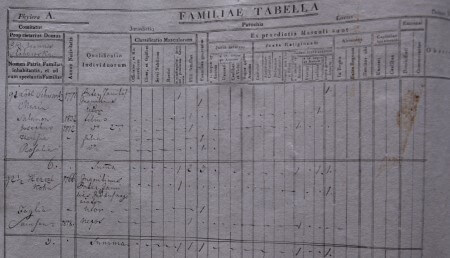
Genealogical research is most often associated with parish registers, but many other historical sources can help uncover the lives of our ancestors. Among the most important are the taxpayer censuses of 1715 and 1720, urbariums, and population censuses.
Taxpayer Census of 1715 and 1720
In 1715, the Hungarian Diet passed a law establishing a standing army and introducing an annual military tax (contributionale). To distribute this tax fairly, nationwide taxpayer censuses were conducted in 1715 and 1720. The 1720 census was repeated because the results of the 1715 census were not satisfactory to the royal court.
For the first time, the state officially recorded the names of taxpayers (heads of households) and their property holdings. The tax was linked to the individual rather than the land itself. The basis for taxation was the holding (sessio, telek), and the tax amount depended on its size.
What information did they contain?
The census includes:
- name of the taxpayer,
- number of fields (agrae),
- newly cultivated land (extirpaturae),
- meadows (pratae),
- vineyards (vineae).
Various units of measurement were used: for fields, the joch (0.575 ha), cubulus (about 0.4 ha), and Pressburg measure (about 2,150 m²); for meadows, falcastrum (28–46 ares) and currus (25 ares of hay); for vineyards, fossor (about 2.7 ares). Sub-tenants (subinquilinus) were often omitted.
Where can they be found online?
➡ Open the 1715–1720 Census Browser
The censuses are also available online:
Searching is possible by name or settlement (in Latin or Hungarian form). For settlements, it is advisable to use historical place names as well.
Urbariums – Duties and Life of Serfs
Urbariums contained records of peasant property and obligations owed to the landlord. Land was divided into rustical (peasant land) and dominical (manorial land).
Three basic types of urbarium holdings existed:
- Peasant holding – courtyard, garden, backyard plots, fields and meadows.
- Cottager holding – mainly residential property with a small amount of land.
- Householder property – dwelling and basic building plots only.
Urbariums mainly served to record dues and obligations – monetary payments, natural produce, or labor services. Not all urbariums contained lists of names. For genealogical research, it can be a disadvantage that sub-tenants and remote settlements were often omitted.
Portal and Tax Censuses
Portal census – the unit of taxation was the porta (gate), meaning that several households or farmers could belong to a single taxable unit.
Tax (dical) census – the first nationwide taxpayer census in the Kingdom of Hungary was conducted in 1715.
Population Censuses
Before the abolition of serfdom in 1848, population records were often linked to taxpayer censuses. The first modern census was carried out in 1869, followed by censuses in 1880, 1890, 1900, and 1910. They were conducted as of December 31 in years ending with zero.
Why Are These Sources Important?
By combining parish registers, urbariums, censuses, and population records, we can create a more complete picture of the economic and social circumstances of our ancestors. These sources complement the basic information found in parish registers and provide valuable historical context.
Conclusion
For genealogical research, it is important to use sources beyond parish registers. Taxpayer censuses, urbariums, and historical population records are now available online and can enrich a family tree with valuable details.